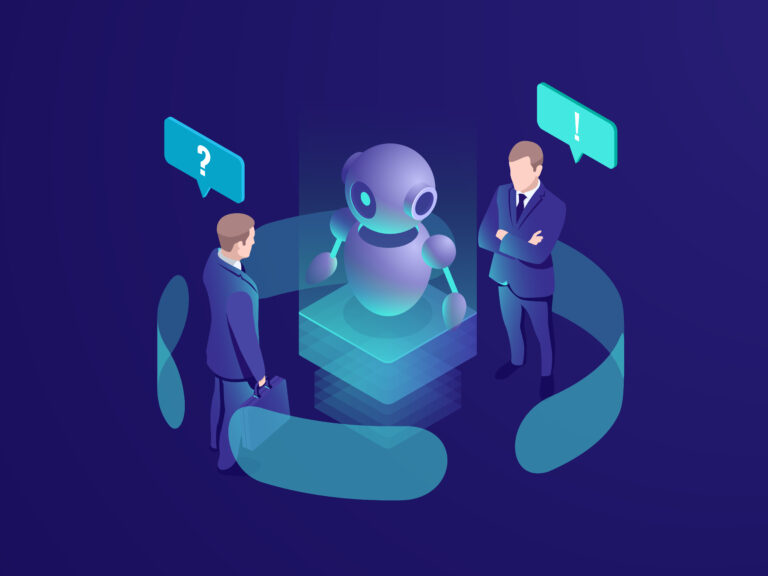
Customer service has evolved significantly in recent years thanks to artificial intelligence (AI) integration. Companies are constantly looking to optimize their processes and improve the user experience, and AI has proven to be a key tool in achieving these goals.
From task automation to service personalization, AI redefines how businesses interact with customers.
One of the most effective advances in customer service is the incorporation of chatbots and virtual assistants.
These AI-based systems allow you to serve customers immediately, providing automated and accurate responses to common queries. Thanks to natural language processing (NLP), these assistants can interpret and respond with a high level of understanding, effectively simulating human interactions.
Chatbots can operate on multiple platforms, from websites to messaging applications such as WhatsApp or social networks, ensuring 24/7 availability. This improves operational efficiency for companies, reduces waiting times, and increases user satisfaction. In addition, when a query is too complex to be solved automatically, systems can escalate the case to a human agent seamlessly and without communication interruptions.
2. Analyze sentiment to understand your customers
Beyond answering questions, AI can analyze emotions and detect the tone of interactions through sentiment analysis. This technology evaluates written or voice interactions to detect moods such as frustration, satisfaction, or urgency. With this information, companies can adjust their responses in real-time and offer more empathetic and personalized solutions.
For example, if a customer expresses frustration in a chat, the system can prioritize their query and direct them to a specialized problem-solving agent. In this way, potential conflicts are avoided, and brand perception is improved, strengthening customer loyalty.
3.Personalize service and build customer loyalty
Another key benefit of AI in customer service is the ability to personalize. Thanks to advanced algorithms, AI systems can analyze historical data and preferences of each user to offer recommendations and solutions tailored to their specific needs.
Companies can use this information to anticipate customer expectations, suggesting products, promotions, or solutions before the user requests them. This level of personalization not only improves the customer experience but also increases conversion and loyalty rates.
4. Automate your processes, increase efficiency, and reduce costs
Automating repetitive tasks through AI enables companies to improve operational efficiency and reduce costs. AI can handle common requests, update databases, and schedule appointments without human intervention, optimizing the workload of service teams.
In addition, AI can optimize workflow by assigning queries to the right agents based on their expertise and availability. This reduces the workload on support teams and improves response times, ensuring a more agile and effective service.
5. Anticipate predictive analytics for continuous improvement
The analysis of large volumes of data enables AI to identify patterns and trends in customer interactions. This gives companies the ability to anticipate recurring problems and adjust their customer service strategies before issues escalate.
For example, if multiple customers make the same query about a product or service, the company can update its information or improve its digital communication to resolve queries proactively. This ability to continuously adapt ensures that customer service evolves along with consumer needs.
6. Strengthens security and compliance
The use of AI in customer care can also contribute to safety and compliance. Thanks to technologies such as speech recognition and automated call transcription, companies can keep detailed records of interactions to ensure regulatory compliance and resolve disputes more efficiently.
In addition, AI can detect suspicious or fraudulent activity in real-time, protecting both businesses and their customers. Implementing these solutions strengthens confidence in services and minimizes operational risks.
Take it to the next level with AI
Artificial intelligence is no longer an emerging trend but an essential component of customer service. Its ability to automate processes, analyze data, and personalize interactions is transforming the way companies support their users.
As technology continues to evolve, the possibilities for AI in customer service will continue to expand. Companies that adopt these solutions will optimize their operations and deliver more satisfying and efficient customer experiences, solidifying their position in an increasingly competitive marketplace.
Find out more about how to improve customer service and experience by clicking here.
Telephone collection management is a fundamental process for financial companies, banks, insurers, and any organization that offers credit or services with recurring payments. However, the traditional model based on human agents presents multiple challenges: high operational costs, slow response times, and difficulties in scaling operations efficiently.
In this context, artificial intelligence (AI) has emerged as a key solution to optimize collection processes, improving customer interaction efficiency, personalization, and effectiveness.
Intelligent Automation in Debt Collection Management
Traditionally, debt collection call centers have relied on human agents to contact customers with outstanding debts, negotiate payments, and record payment commitments. However, this approach has limitations:
High costs: Agent salaries, training, and supervision are significant investments.
Limited scalability: As the volume of customers in arrears grows, it is difficult to increase operational capacity without increasing costs.
Human error: Fatigue and lack of information can affect the quality of interactions.
How AI improves this process:
Automating calls and messages: Intelligent agents and chatbots can make multiple contact attempts without human intervention.
Identifying the best time and channel for contact: Through data analytics, AI can determine when a customer is most likely to respond.
Prioritization of cases according to the probability of payment: Advanced algorithms can predict which customers are most likely to settle their debt.
Personalization and empathy in interactions
One of the main challenges in collections management is getting customers to respond and feel understood in their financial situation. A rigid and aggressive approach can generate resistance and increase the rejection rate.
How AI improves personalization:
Behavior pattern recognition: Analyze how a customer has responded to previous contacts to adjust communication strategy.
Tailoring tone and message: Can generate empathetic and tailored responses to each customer, avoiding a blanket approach.
Customer segmentation by risk and payment capacity: Allows offering flexible payment plans according to each person’s situation.
Reduced operational costs and increased productivity
One of the most important benefits of AI in collections management is its ability to reduce costs and improve team efficiency.
Reduced need for large teams of human agents: AI can handle repetitive tasks, leaving more complex cases to human agents.
Optimization of agent time: Unanswered calls and failed attempts are reduced thanks to intelligent contact prioritization.
Automation of interaction logging: AI systems can record conversations, update databases, and generate reports without manual intervention.
Companies that have implemented AI in their collections call centers have reported a reduction of up to 40% in operating costs and an increase in the effective contact rate by more than 30%.
Monitoring and predictive analytics to improve strategies
AI not only optimizes customer contact but also provides valuable information to continuously improve collection strategy.
Key metrics that AI can analyze:
Response rate by channel: do customers respond more to calls, SMS or emails?
Average time to payment after first contact: How long does it take a customer to pay after receiving a reminder?
Effectiveness of negotiation strategies: Which approaches generate the highest success rate?
Challenges and considerations in implementing AI in Debt Collection
While AI offers multiple benefits, its implementation also presents challenges that must be considered to ensure its effectiveness.
Common challenges:
Resistance to change in traditional teams: Training human agents to work in conjunction with AI is key.
Regulations and compliance: Companies must ensure that AI complies with consumer protection and data privacy regulations.
Balance between automation and human contact: AI should be used to enhance the customer experience, not dehumanize it.
Customer resistance to dealing with AI: Some people may be wary of automated systems, perceiving them as impersonal or ineffective.
To address customer resistance, it is important to:
Be transparent about the use of AI: Inform the customer that they are interacting with an intelligent system and offer the option to speak to a human if they wish.
Make AI more conversational and empathetic: Incorporate natural language and adaptive responses that build trust.
Leverage AI to assist human agents: Allow the automated system to handle the initial phase of contact and transfer the conversation to an agent when necessary.
Artificial intelligence is revolutionizing telephone collections management, enabling companies to automate processes, personalize interactions, reduce costs, and improve operational efficiency. However, to maximize its effectiveness, it is critical to overcome adoption challenges, both in internal teams and customer acceptance.
Intelligent agents represent a key evolution in this process, as they combine the accuracy of AI with the empathy needed to achieve successful customer agreements. Companies that adopt these technologies will not only improve their recovery rates but also optimize the customer experience and the profitability of their operations.
Find out more about maximizing debt recovery with AI solutionsby clicking here.
Customer retention is a constant challenge for businesses, as churn can significantly impact revenue and brand reputation. Fortunately, artificial intelligence (AI) offers advanced tools to identify and address the risk of churn proactively.
Customer churn, or “churn,” refers to losing customers during a given period. This metric is essential for assessing customer satisfaction and loyalty and can signal potential impacts on a company’s financial results.
Signs of churn risk
Identifying signs of potential churn early is crucial. Some common indicators include:
Decrease in purchase frequency or service usage: When a customer reduces the regularity with which they interact with the company, it can be a sign of disinterest or dissatisfaction.
Reduction in the number of purchases: A drop in the value of transactions may indicate that the customer is exploring alternatives or no longer finds value in the current offering.
Lack of interaction with marketing communications: If a customer stops opening emails, ignores promotions, or does not participate in surveys, they may be disengaged with the brand.
Increase in complaints or support requests: An increase in negative interactions or unresolved issues may lead the customer to seek solutions from competitors.
Detecting all these signals in whatever channel the customer uses is key, but often the information that customers provide in their phone or chat interactions with customer services is forgotten, leaving a gold mine of information about a potential churn or switch unexplored.
Application of AI in detecting churn risk
AI makes it possible to analyze large volumes of data to identify patterns that might go unnoticed through traditional analytics. By applying machine learning algorithms, companies can predict which customers are most likely to churn and act accordingly.
For example, some AI solutions analyze all customer interactions, detecting and weighing customizable parameters for each business. These tools assign a risk score, alerting you to customers most likely to churn and providing detailed insight into each interaction.
What elements can AIs like the one Recordia use to detect to assign a risk score?
Reasons for the call.
Call resolution.
Overall satisfaction analysis of each interaction.
Key audio metrics such as wait times, silences, overlaps, and speech rate.
Detection of predefined keywords and phrases, competitor mentions, or cancellation threats.
Evaluations and time trends.
Benefits of Implementing AI Solutions for Customer Retention
Proactive interventions: By identifying at-risk customers, companies can take preventive measures, such as offering discounts, improving customer service, or providing personalized incentives.
Personalization of the customer experience: AI makes it possible to analyze past customer behavior and predict which customers are most at risk of churn. This allows companies to intervene in advance with targeted actions to prevent churn.
Reducing churn rates: Thanks to AI, it is possible to identify the key levers that influence customer retention and develop strategies to increase recurring revenue and the financial stability of the business.
Resource optimization: By focusing efforts on customers with higher risk, the efficiency of retention strategies is maximized, avoiding investments in segments with a lower probability of churn.
Improve Customer Lifetime Value (CLV): By better understanding the customer’s needs and problems, you can increase long-term retention rates, and the duration of the customer relationship and facilitate cross-selling.
Success stories in implementing AI for customer retention
Several companies have been able to improve their retention rates by implementing AI solutions, for example:
Telecommunications companies: They have used predictive models to identify customers at risk of switching providers, allowing them to offer personalized promotions and improve customer service.
Financial institutions: By analyzing transaction patterns and behaviors, they have been able to detect dissatisfied customers and offer proactive solutions to retain them.
E-commerce platforms: By analyzing browsing and purchasing behavior and customer service incidents, they have identified churn-prone customers and offered them personalized incentives to encourage loyalty.
As technology advances, AI will continue to play a key role in customer retention strategies. Companies that adopt these tools will be better positioned to anticipate customer needs, deliver personalized experiences, and maintain a competitive advantage in the marketplace.
Find out more about customer retention and churn reduction and how AI solutions are helping by clicking here.
The financial industry has historically been one of the most regulated sectors due to its critical role in economic stability. In this context, the European Union has introduced the Digital Operational Resilience Regulation (DORA), a regulation designed to strengthen the financial sector’s ability to withstand and recover from technological incidents and cyber-attacks.
On January 17th, 2025, this European regulation came into force, establishing a regulatory framework to strengthen the IT security of financial institutions. This regulation seeks to ensure that institutions such as banks, insurers, and investment firms remain resilient to serious operational disruptions.
Entities must develop comprehensive frameworks to identify and classify critical assets, conduct ongoing risk assessments, and establish appropriate cybersecurity measures. The management body is responsible for defining risk management strategies and can be held personally liable for non-compliance.
2. Incident Reporting:
It is mandatory to establish systems to monitor, manage, record, classify, and report ICT-related incidents. Entities must report to the competent authorities and affected customers and partners on serious incidents, providing initial, interim, and final reports.
3. Digital Operational Resilience Testing:
Financial institutions should conduct periodic tests to assess their ability to withstand and recover from ICT-related incidents. These tests seek to identify vulnerabilities and ensure the effectiveness of the security measures implemented.
4.Risk Management of Third-party ICT Service Providers:
DORA establishes the need to monitor and manage the risks associated with third-party technology service providers. This includes assessing suppliers’ security and ensuring they comply with established standards.
Challenges and opportunities in the implementation of DORA
The implementation of DORA presents both challenges and opportunities for financial institutions:
Challenges
Opportunities
Adapting to new requirements can involve significant costs and the need to upgrade technological infrastructures.
DORA offers the opportunity to strengthen digital infrastructure, improve risk management, and increase confidence in digital financial services.
It is essential to ensure that all personnel are trained in the new policies and procedures to ensure compliance.
The adoption of advanced technologies, such as AI, can improve operational efficiency and provide a competitive advantage in the marketplace.
The role of artificial intelligence in DORA compliance
The use of artificial intelligence and data analytics in banking is not new, but with DORA it becomes even more relevant. AI-based solutions can help institutions monitor their systems in real-time, detect anomalies, and prevent failures or fraud before they become critical problems.
AI-based solutions enable:
Analysis of large volumes of data:
AI efficiently processes large amounts of structured and unstructured data, identifying patterns and anomalies that could indicate potential risks. For example, through machine learning, it is possible to detect unusual financial transactions or behaviors that suggest fraud or bribery.
Regulatory compliance automation:
AI can automate monitoring and reporting requirements, ensuring that entities comply with current regulations. This includes detecting potential violations and generating necessary reports for regulatory authorities.
Fraud detection and prevention:
Using machine learning algorithms, AI identifies patterns of behavior that may indicate fraudulent activity, enabling proactive response and risk mitigation.
Technology solutions to strengthen operational resilience
To meet DORA requirements, financial institutions can implement a variety of technology solutions to enhance their digital operational resilience:
1. Interaction Recording and Analytics:
The most advanced platforms, such as Recordia, offer AI-powered call recording and voice analytics services, enabling all omnichannel interactions to be captured and analyzed. This ensures regulatory compliance and provides deep insights into conversations, facilitating risk detection and improved customer satisfaction.
2. Voice Biometric Authentication:
Authentication using voice biometrics turns customers’ voices into passwords, creating secure and efficient interactions. This technology detects fraud and impersonation, improving operational efficiency and reducing risks associated with unauthorized access.
3. AI-Powered Conversation Analysis:
Intelligent conversation analysis enables financial institutions to learn from every interaction, guaranteeing an excellent customer experience and ensuring regulatory compliance. This includes transcribing and analyzing conversations to identify areas for improvement and detect potential non-compliance.
The entry into force of DORA marks a milestone in the regulation of digital operational resilience in the European financial sector. Financial institutions must adapt to these new requirements, taking advantage of the technological solutions available to ensure compliance and strengthen their position in an increasingly digitized environment.
Find out more about how advanced AI solutions help regulatory compliance by clicking here.
Delivering a seamless and consistent experience across all customer touchpoints is one of the biggest challenges for businesses. Consumers expect frictionless interactions, immediate responses, and personalization, regardless of the channel they use. Artificial intelligence (AI) makes it possible to unify these experiences, optimizing processes and improving customer satisfaction.
The importance of omnichannel in the customer experience
Customers no longer interact with brands in just one way. They may start a conversation on social media, continue it via email, and end it in a phone call or live chat. If each of these channels operates independently, the experience becomes fragmented and frustrating.
AI solutions help centralize customer information in one place, allowing each interaction to have context. This translates into faster, more consistent, and personalized responses.
Conversational AI for automation and personalization
One of the great benefits of AI is its ability to analyze large volumes of data in real-time. This makes it possible to detect behavioral patterns and anticipate customer needs.
AI-powered automation not only optimizes response times but also allows you to personalize each interaction. An intelligent chatbot can remember previous conversations, recommend products based on purchase history, and adapt its tone according to the user’s profile. Thus, each customer receives relevant attention aligned with his or her expectations.
However advanced conversational solutions are going beyond basic chatbots. The use of Natural Language Processing (NLP) and Generative Models allows to:
Detect intent and emotions in customer speech.
Adjust responses based on the history and context of the conversation.
Escalate conversations to human agents, when necessary, with enriched context.
Hyper-segmented personalization with AI: beyond traditional insights
Personalization with AI is not just limited to product recommendations or automated interactions. Advanced technologies make it possible to tailor the entire customer experience at a much deeper level.
Beyond traditional personalization, advanced AI enables hyper-personalization based on:
Real-time analysis of interactions: Dynamic adaptation of offers, interfaces, and messages based on user behavior; detection of key themes and other variables to measure key KPIs of attention.
Predictive recommendation engines: Anticipate customer needs before they express them.
Emotion detection: Allows for the provision of empathetic responses and adjustment of the experience according to the user’s emotional state.
With a more holistic approach, AI can predict changes in customer needs before they are perceived by the customers, facilitating proactive and personalized strategies at each touchpoint.
To achieve a seamless experience, it is critical to implement AI solutions across all customer touchpoints. Some forms of integration include:
Chatbots and virtual assistants: Available on websites, mobile apps, and messaging platforms, these systems can answer queries, handle orders, and provide real-time support.
Natural language processing (NLP): Enabling a better understanding of customer queries and providing more accurate responses, regardless of the wording or channel used.
AI-enabled voice systems: Voice assistants and automated response systems can handle requests naturally and efficiently, reducing wait times.
Predictive analytics: By studying customer behavior, AI can predict customer needs and provide proactive recommendations, improving the shopping experience.
Implementing AI solutions across all channels improves the customer experience and optimizes business operations, reducing costs and increasing efficiency. As technology advances, the ability to deliver seamless and personalized experiences will continue to be a key differentiator in the market.
Find out more about how to create a seamless experience with advanced conversational solutions by clicking here.
Companies operating in regulated sectors face constant scrutiny from regulatory agencies. They must comply with strict regulations that seek to ensure transparency, security, and data protection; but they are not optional, non-compliance can result in millions of dollars in penalties, reputational damage, and, in extreme cases, the loss of the right to operate in that sector.
One of the key aspects of compliance is the ability to demonstrate adherence to regulations at all times. This is where recording technologies and artificial intelligence play an essential role, enabling the efficient recording, analysis, and management of critical data.
There are several industries where regulatory compliance is particularly demanding due to the nature of their operations and the sensitivity of the data they handle:
Financial Sector:Regulations such as MiFID II and Dodd-Frank require the recording of communications and strict monitoring of transactions to prevent fraud and malpractice.
Healthcare and Insurance: Regulations such as HIPAA in the U.S. protect patient privacy and require secure storage of medical data.
Telecommunications: Companies must ensure the security of communications and access to records in the event of government audits and carry out ethical practices in customer service and sales.
Energy and Utilities: Critical infrastructure in these sectors is subject to regulations that seek to prevent cyber-attacks, ensure operational continuity, and secure data safekeeping.
Recording as a Pillar of Compliance and Transparency
Recording interactions, whether calls, videoconferences, or chats, has become an indispensable requirement in sectors such as finance and healthcare. In markets such as banking, regulations such as MiFID II in Europe and Dodd-Frank in the US require the secure recording and storage of communications related to financial transactions.
Beyond the simple capture of data, recording also allows:
Legal evidence: In the face of disputes or audits, having a verifiable record guarded for a specific period can differentiate between a favorable resolution and a sanction.
Consumer protection: In the customer service industry, recording interactions helps prevent fraud and improve service quality by ensuring legal, fair, and ethical practices within the company’s quality and regulatory standards.
Training and internal improvement: Recordings can be used to train teams, create coaching programs, and ensure compliance with internal protocols.
However, manual management of large volumes of recorded data is unfeasible without tools that facilitate their organization and analysis. This is where artificial intelligence becomes an essential ally.
Artificial Intelligence: Efficiency and Accuracy in Regulatory Supervision
AI has revolutionized the way companies monitor and ensure regulatory compliance. Thanks to advanced algorithms, artificial intelligence technologies can analyze large volumes of data in real-time, identifying patterns, anomalies, and potential compliance risks.
Some of the most relevant applications of AI in this context include:
Automated transcription and sentiment analysis: converting audio to text allows for quick searches within thousands of hours of recordings, while sentiment analysis can detect problematic interactions.
Keyword detection and automatic alerts: AI systems can be configured to identify sensitive terms related to regulations or non-compliance, triggering alerts for immediate manual review.
Compliance automation: By integrating AI with risk management platforms, companies can implement automated workflows that reduce administrative burden and minimize human error.
Predictive analytics and risk prevention: AI can anticipate potential regulatory violations by analyzing historical patterns and real-time data, helping companies take preventative action before problems arise.
The value of these tools lies not only in their ability to detect problems but also in their potential to prevent violations before they occur. AI facilitates audits and regulatory reviews and helps to create an organizational culture based on transparency and continuous improvement.
A Proactive Approach to Sustainable Compliance
The combination of recording and artificial intelligence technologies responds to today’s regulatory demands and positions companies at a higher level of readiness and efficiency. In an environment where regulations are constantly evolving and the risks of non-compliance are high, investing in these solutions is no longer an option but a strategic necessity that will not only help you avoid penalties but also strengthen your reputation and the trust of your customers and partners.
Find out more about regulatory compliance and how advanced recording and AI solutions help in this ebook.
Talking about recording, transcribing, and analyzing interactions with artificial intelligence (AI) may sound like something that is not for you, but in many industries, it is already an essential practice to improve processes, understand customers, and optimize results.
The application of these technologies is not only transforming the way companies work but also the results they achieve by implementing smarter, more adaptive solutions.
Key Interaction Recording and Analysis Technologies
AI-based interaction recording and analytics solutions include advanced tools to capture and process data efficiently:
Natural Language Processing (NLP): analyzes real-time or recorded conversations to identify intentions, emotions, and keywords.
Speech Recognition: Converts spoken interactions into text to facilitate analysis.
Sentiment Analysis: Detects emotions and tone to understand user needs better.
Task Automation: Processes such as transcription or tagging of interactions are performed automatically.
Predictive Models: Identify patterns to anticipate behaviors or outcomes.
These technologies allow companies to be more proactive, improve customer experience and optimize operations.
Contact Centers and BPOs: Improving the customer experience
Contact centers and BPOs face the challenge of managing high volumes of interactions while maintaining service quality. Optimizing processes and ensuring a satisfactory customer experience are crucial in this sector.
Key applications of AI in this industry include:
Real-time conversation analysis to provide recommendations to agents.
Identifying patterns in queries to optimize the resolution of frequent problems.
Improving service quality through automated monitoring of agent performance.
These tools enable increased customer satisfaction and reduced management times.
Telecommunications: Empowering connectivity
The telecommunications sector is facing high competition and increasingly demanding customers. The need to identify technical problems reported by customers proactively and to personalize service offerings makes AI-based solutions indispensable.
The telecommunications sector uses recording and analysis of interactions to:
Identify recurring technical issues and complaints and improve front-line resolution.
Personalize offers based on customer usage patterns and preferences.
Ensure service quality through automation of quality control processes.
Analyze customer sentiment in their interactions to reduce churn rates.
These capabilities make companies more agile in adapting to market needs.
Energy: Efficiency and sustainability
Energy companies are under pressure to meet sustainability standards while managing efficient customer service. Frequent consumption and tariff queries are key areas of optimization.
Energy companies are using AI to analyze customer interactions and achieve:
Optimize customer service by identifying common queries.
Detect patterns and provide personalized recommendations.
Monitor complaints to improve service quality.
Automated analytics enables more efficient management and better compliance with sustainability objectives.
Banking and Finance: Security and Efficiency in Operations
The banking industry operates in a highly regulated environment and faces the challenge of maintaining high levels of security while delivering agile customer experiences.
In an environment where trust and security are paramount, these tools enable:
Call monitoring to ensure regulatory compliance.
Fraud detection by identifying suspicious patterns.
Automation of repetitive tasks such as request classification.
This translates into a more agile and secure experience for customers.
Collections: Optimizing Debt Recovery
The collections industry faces the challenge of maximizing debt recovery without compromising the customer relationship. A more strategic and customized approach can make all the difference.
In the collections arena, recording and analytics technologies help to:
Improve communication strategies with debtors.
Identify the most appropriate times to contact customers.
Monitor regulatory compliance in all interactions.
Thanks to these capabilities, companies can maximize their recovery rates without compromising the customer experience.
Public Administrations: Innovating in Citizen Management
Public administrations face the challenge of efficiently managing citizen queries and automating processes while ensuring transparency and compliance.
Read more about the benefits of AI for Public Administration:in this article
In the public sector, AI is helping to improve services by:
Analyzing citizen consultations to identify key areas for improvement.
Automating administrative processes.
Monitoring regulatory compliance in interactions.
This enables more efficient management and improved citizen satisfaction.
Bridging the gap between technology and industries is no longer an option, but a necessity. Each of these sectors has found recording and analyzing interactions with AI a powerful tool to transform the way they operate and, more importantly, to generate a significant impact on the lives of the people around them.
Thanks to artificial intelligence (AI), the relationship between companies and their customers is changing dramatically. By 2025, customer service will be not only more efficient but also more personalized and emotionally intelligent. These transformations are driven by innovative technologies that redefine customer experience and operational efficiency.
Below, we explore how AI is shaping the future of the field.
Consistency across communication channels is essential in modern customer service. AI will enable seamless omnichannel experiences, where customers can switch from one channel to another without losing the context of the conversation. This means that a customer could start a query on social media, continue it in live chat, and finish it on the phone without repeating their information or explaining the problem again.
This capability will be key to improving efficiency and customer satisfaction. Companies that adopt these technologies will optimize their operations and create smoother and more trusting relationships with their customers.
2. Sentiment Analysis and Emotional Recognition
Artificial emotional intelligence will be one of the key pillars in the transformation of customer service. By 2025, AI systems can analyze sentiment in real-time across multiple channels, such as calls, chats, and emails. This will enable companies to capture their customers’ emotional states and respond empathetically and efficiently.
3. Automation and Prediction: Redefining Service
Another trend that will continue to gain traction is the automation of repetitive tasks. AI systems will take over tasks such as query sorting, data collection, service quality analysis, and common problem solving, allowing human agents to focus on more complex, higher-value cases. This human-machine collaboration will not only improve operational efficiency but also increase service quality.
In addition, predictive AI will play a crucial role in anticipating customer needs. By analyzing large volumes of data, these tools can identify patterns and predict behaviors, enabling proactive solutions. For example, a company could identify that a customer is about to cancel a service and take steps to retain them before this happens.
4. Generative AI and Hyper-realistic Chatbots
Chatbots have come a long way from their rudimentary beginnings. By 2025, hyper-realistic chatbots, powered by generative AI, will offer surprisingly human-like interactions. These tools will not only answer questions but also create personalized content, such as detailed recommendations, images, and even code.
Thanks to this evolution, customers will enjoy more natural conversations, eliminating the frustration of communicating with systems that don’t understand their needs. Furthermore, by combining these capabilities with continuous learning, chatbots will be able to adapt to each customer, improving satisfaction and fostering deeper relationships.
5. Ethics in the Use of AI
As AI becomes an integral part of customer service, ethics in its use will be a growing priority. Companies will need to ensure that their systems are fair, transparent, and respectful of users’ privacy. This will involve everything from explaining how decisions are made to ensuring that personal data is handled securely and in compliance with regulations.
In 2025, customers will demand more clarity and accountability in the use of AI. Companies that adopt ethical practices will not only meet regulatory expectations but will also gain the trust and loyalty of their customers.
The revolution in customer service is just beginning, and artificial intelligence will be the driving force behind this transformation. Companies that embrace these trends will not only improve their customers’ experience but also position themselves as leaders in an increasingly competitive market. The key will be to combine technological efficiency with a customer-centric approach, ensuring that every interaction is meaningful and of value.
Discover more about how to improve Customer Service with advanced conversational intelligence solutions by clicking here.
Artificial intelligence (AI) has emerged as an essential tool for companies looking to optimize processes and improve their relationship with customers. Among the most disruptive technologies is voice AI, a solution that allows you to analyze, transcribe, and extract intelligence from spoken interactions.
Voice AI transforms conversations into strategic assets. Thanks to advanced tools such as conversational analytics and sentiment analysis, companies can access a wealth of previously unnoticed data.
For example:
Intelligent transcripts: Converting conversations into text optimizes data storage and enables quick searches and detailed analysis of interactions.
Sentiment analysis: Identify sentiment during a call. This is especially useful for measuring customer satisfaction and detecting signs of frustration or enthusiasm that can guide service strategies.
Voice biometrics: Facilitates real-time authentication of customers through their unique voiceprint, reducing fraud risks and improving the user experience by eliminating lengthy verification processes.
The key to success lies in using these capabilities in a focused manner, aligning their implementation with business goals.
Alignment with strategic objectives
To ensure that the implementation of voice AI has a significant impact, it is critical to align it with the organization’s specific objectives. This involves taking a structured approach:
1. Define clear goals
The first step is to set tangible goals that address specific business needs. These goals should be:
Specific: For example, “reduce customer complaints by 15% over the next six months”.
Measurable: Use metrics such as average response time or customer satisfaction ratings.
Relevant: Goals should have a direct impact on the company’s overall performance.
A case study might be a call center seeking to improve service quality. Implementing real-time sentiment analysis allows supervisors to intervene on critical calls, ensuring a positive customer experience.
2. Integration with existing systems
Voice AI is most powerful when integrated with other key platforms, such as CRM, PBX systems, or other collaboration tools such as Microsoft Teams. This integration enables centralized management and maximizes the leverage of collected data.
For example, Recordia offers solutions that easily integrate with tools such as Microsoft Teams or Salesforce, allowing teams to access relevant information in real-time and streamline their processes.
3. Team training
Adopting new technologies requires an investment in team training. Employees must understand how voice AI works, how it can benefit their roles, and how to use it to maximize its impact.
An effective training program should include:
Hands-on workshops on the use of the technology.
Briefings on the strategic objectives linked to voice AI.
Periodic evaluations to ensure adoption and appropriate use.
Use cases in key sectors
The versatility of voice AI allows its application in multiple industries, each with unique challenges.
Financial sector: Compliance with regulations such as MiFID II or Dodd-Frank can be efficiently managed with voice recording and analytics solutions. Conversations are documented and accessible for audits, reducing legal risks.
Telecommunication: Sentiment analysis tools enable businesses to better understand customer preferences and frustrations, personalizing marketing and loyalty strategies.
Contact Centers: Conversational analytics can identify agent skills and improve their interactions with customers while automating quality control to optimize supervisory processes.
Healthcareand Insurance: Voice AI systems can assist in transcribing interactions between doctors and patients, improving the accuracy of medical records and reducing the administrative burden.
Each industry can tailor voice AI capabilities to specific needs, achieving greater operational efficiency and an improved customer experience.
Measuring results and continuous improvement
Once voice AI is implemented, measuring results is essential to assess its impact and make necessary adjustments. Custom dashboards allow companies to monitor key metrics such as:
Customer satisfaction levels.
Problem resolution times.
Most relevant keywords or issues.
Compliance with quality scripts.
Percentage of customers who have abandoned.
Percentage of customers at risk of abandonment.
Operational efficiency.
This continuous assessment enables companies to make adjustments to their strategies and respond nimbly to new challenges. By identifying patterns and trends, organizations can anticipate customer needs and strengthen their competitive position.
With voice AI, companies not only optimize their processes but also gain valuable insights that drive informed strategic decisions. Leveraging this technology in a way that is aligned with business goals not only transforms daily interactions but also positions organizations for sustainable success in the future.
Artificial intelligence (AI) is revolutionizing the way companies approach their processes, and speech analytics is no exception. This advance makes it possible to analyze large volumes of telephone conversations to extract valuable insights.
However, the central question is: are we ready to delegate important decisions to this technology?
Since its inception, AI has evolved from an automation tool to an advanced decision-making assistant. Speech Analytics is positioned as one of the most promising technologies, capable of transcribing conversations, identifying patterns and emotions, and generating predictive analytics.
In a competitive business environment, this is especially useful for:
Accurately comply with regulations: Speech Analytics helps verify that interactions comply with regulations such as GDPR or PCI DSS.
Increase operational efficiency: By automating quality analysis, time and margin for human error are reduced.
However, the transition to autonomous decisions poses challenges for companies to consider.
Benefits and limitations of delegating to Speech AI
One of the main benefits of Speech Analytics is the ability to analyze data quickly and on a large scale. This includes not only the words spoken but also the tone, rhythm, and emotion in the voice. This allows trends such as customer dissatisfaction to be identified before they escalate into larger problems.
However, there are limitations to consider:
Lack of full context: While AI can process data quickly, it may lack the ability to interpret human nuances or contextual information that is not in the recorded conversation.
Data biases: The accuracy of the analysis depends on the quality and diversity of the data used to train the model.
Technology dependency: Excessive delegation of decisions could lead to losing critical skills in human teams.
These limitations underscore the importance of using Speech Analytics as a complement, not a substitute, in decision-making.
The future: collaboration between Humans and AI
The path to full adoption of Voice AI in key decisions is not just about replacing human processes, but about building a collaborative ecosystem where humans and artificial intelligence work together to maximize the value of data. This collaborative approach is critical to ensure that decisions are not only fast and accurate but also aligned with strategic and ethical business objectives.
Solutions like Recordia are leading this shift by offering advanced Speech Analytics tools that integrate security, accuracy, and compliance. These solutions enable organizations to leverage the best of both worlds: the analytical and predictive capabilities of AI, along with human creativity and critical judgment.
In this context, three key scenarios emerge for the adoption of AI in decision-making:
1. AI-Assisted decisions:
In this model, AI acts as a strategic ally, generating insights and metrics from customer interactions. For example, in a customer service center, speech analytics could highlight keywords related to recurring complaints, allowing supervisors to address problem areas immediately.
This scenario can improve the efficiency of human teams by reducing the time spent on manual tasks such as listening to calls. The big challenge of implementing this type of model lies in the limitation caused by over-reliance on AI for the development of analytical skills in teams.
However, these suggestions still need to be validated by a human before being implemented. In this way, an additional layer of security and human validation is provided, reducing the margin of error in critical decisions, but care must be taken that processes are clear and delineated to make decision-making more efficient.
3. Fully autonomous decisions:
In predefined or highly regulated processes, such as customer authentication using voice biometrics, AI could make decisions without human intervention. For example, an AI system can automatically block a suspicious transaction based on previously identified fraud patterns.
This level of automation makes it possible to scale operations significantly and handle complex scenarios quickly and accurately, but it also implies that the models are transparent and ensure legal and ethical compliance.
To determine which of these scenarios or combination of scenarios best suits their needs, organizations must consider factors such as the nature of their operations, the level of acceptable risk, and the degree of technological maturity of their teams.
In addition, the ethical dimension cannot be ignored in this transition. Human-IA collaboration must prioritize transparency and traceability of decisions. This implies developing tools that allow decision-makers to understand how and why AI reaches its conclusions.
Are we ready?
Delegating important decisions to Voice AI is not just a technological issue; it also involves cultural and organizational change. Companies must invest in:
Training for their teams: Employees must understand how to use the insights generated by AI.
Transparency in processes: Ensure that AI decisions are explainable and auditable.
Adaptation to regulatory frameworks: Speech Analytics integration must be aligned with industry regulations and customers’ ethical expectations.
Ultimately, whether we are ready to delegate key decisions to Speech AI depends on each company’s readiness. With strategic and ethical implementation, this technology has the potential to positively transform the way decisions are made in large call centers and beyond, but without ever forgetting the human talent behind each of them.
Find out more about task automation and informed decision-making through AI by clicking here.
Fraud always seems to be one step ahead, and banks face constant pressure to protect not only their assets but also the trust of their customers.
Fraudsters become more ingenious daily, while traditional security methods, such as passwords, security questions, and tokens, seem to lag behind.
However, a quiet revolution is taking shape in the bowels of financial institutions: voice biometrics and voice analytics powered by artificial intelligence (AI). These technologies are not only marking a before-and-after in the fight against fraud but are also transforming the relationship between banks and their customers.
Picture this: a routine call to the bank. A customer needs to check his balance. What used to require answering repetitive questions, remembering passwords, or looking up security tokens is now reduced to a few seconds. Without the need to speak predefined keywords, the system recognizes the customer’s voice, analyzes their unique characteristics, and confirms their identity. All while the customer speaks naturally, without interruptions, without friction.
By capturing unique characteristics of the human voice, such as pitch and resonance, this technology offers a level of security that traditional methods cannot match.
Protection against impersonation: Each customer’s unique voiceprint is extremely difficult to spoof, even with recordings.
Fast and efficient authentication: The customer is identified in a matter of seconds, significantly reducing operational times.
Reduced operational costs: By eliminating lengthy verification processes, banks save time and resources.
Frictionless experience: No need to remember passwords and passphrases, improving customer convenience.
Voice Analytics for Proactive Fraud Detection
If voice biometrics is the shield, artificial intelligence is the magnifying glass that finds the cracks. AI-powered systems verify identities and analyze interactions in real-time, looking for signals that may indicate risk.
Real-time fraud identification: Changes in tone or unusual pauses can alert to fraud attempts.
Proactive prevention: Suspicious behavior is detected before it materializes into an attack.
Reduced false positives: AI improves accuracy in risk identification, avoiding unnecessary inconvenience to legitimate customers.
Personalized attention: Banks can adjust their approach in real time based on emotions detected in calls.
The future of banking security: A more human and secure dialogue.
As voice biometrics and AI are refined, banks are finding that these technologies not only strengthen security but also redefine what it means to interact with customers.
Instead of viewing authentication as a formality, banks can turn it into a moment of connection. When customers feel that their bank recognizes them, not just as account numbers, but for who they are, the relationship is transformed.
The future is not limited to phone calls. These technologies are beginning to integrate with digital channels, from mobile apps to virtual assistants. The same voiceprint that authenticates a call can be used to log into an app or confirm a transfer.
Voice biometrics and AI-enabled voice analytics are moving banks into a new security and service paradigm. More than tools, they are strategic allies in an era where trust is as valuable as money.
Ultimately, these technologies take us back to the basic principle of any financial relationship: the voice of a customer. Listening to it, protecting it, and respecting it is, now more than ever, the key to building the future of banking.
Discover more about the solutions for the banking industryby clicking here.
Ensuring the security of online interactions is a crucial priority. Conventional methods are proving to have significant shortcomings. With that, innovative authentication tools are emerging that offer robust protection against cyber threats and an intuitive and trusted user experience.
The Context: Digital Security and Trust Challenges
Cyber threats are evolving rapidly, from traditional attacks to artificial intelligence-driven deepfakes. Conventional authentication methods, such as passwords or security questions, have proven insufficient and can be stolen, hacked, or breached.
In addition to their technical vulnerability, from a psychological point of view, conventional methods generate:
Anxiety about forgetting: remembering multiple passwords or security questions generates frustration and stress, especially when people are forced to reset them constantly.
Sense of vulnerability and distrust: Frequent news reports about massive hacks weaken user confidence in these solutions.
These shortcomings have led users to prefer alternatives that are not only secure but also easier to use and adapt to their daily routines.
Technical Security: Advanced Threat Protection
Voice biometrics uses the unique characteristics of each person, such as pitch, frequency, and vocal micro-variations, to verify identities in an accurate and difficult-to-replicate manner. Through advanced algorithms and artificial intelligence, this technology is able to detect even the most sophisticated impersonation attempts.
Key Security Capabilities:
Deep Voice Analysis: Modern systems analyze not only the content of speech but also physiological characteristics, such as resonance in the vocal cords, impossible to mimic with deepfake technologies.
Dynamic Phrases: Some solutions allow randomly generating phrases for each authentication, eliminating the possibility of reusing pre-existing recordings.
Anomaly Detection: Systems identify patterns and artifacts characteristic of artificially generated recordings, making them resistant to AI-driven attacks.
Continuous Authentication: In applications such as contact centers, voice biometrics can perform periodic checks to ensure that the authorized user remains active.
These capabilities make voice biometrics a reliable tool against emerging threats, protecting sensitive data and critical transactions.
User Psychology: Trust and Positive Experience
From a psychological perspective, voice biometrics improves security and transforms user perception towards authentication systems.
Key Psychological Factors:
Sense of Exclusivity: users feel that their voice, a unique and non-transferable trait, represents a personalized layer of security. This strengthens their trust in the system.
Reduced Cognitive Stress: The elimination of passwords and security questions simplifies the experience, reducing the anxiety associated with managing multiple credentials.
Frictionless Experience: Speaking is a natural and simple action, making voice biometrics a non-intrusive method that fits into daily routines.
Immediate Feedback: Rapid authentication reinforces satisfaction, generating instant gratification that traditional methods fail to deliver.
Confidence in Innovation: The association of biometrics with advanced technologies generates a positive perception towards companies that implement this solution.
Voice Biometrics: Security and Reliability Combined
The true power of voice biometrics lies in its ability to integrate advanced technology with a user-oriented experience. While other methods can be technically secure, but psychologically frustrating, voice biometrics strikes a balance that protects and builds loyalty and trust.
Deepfake Protection: The combination of deep voice analysis and anomaly detection ensures that even the most advanced threats are identified and blocked.
Increased Satisfaction: Users appreciate the simplicity and speed of speaking instead of remembering complex passwords.
Reduced Risk of Breaches: By eliminating insecure practices such as password sharing, internal vulnerabilities are reduced.
Regulatory Compliance: Technologies such as voice biometrics comply with global regulations and reinforce the perception of accountability in enterprises.
Voice biometrics is positioned as an end-to-end solution in a world where digital security and user experience are priorities. By combining advanced technical capabilities with a positive impact on user confidence, this technology not only mitigates the most sophisticated threats but also generates trust and satisfaction.
Voice biometrics is not only a tool to protect identities, but a bridge to a stronger relationship between users and technology systems, revolutionizing the way users perceive and trust authentication systems.
Discover more benefits of voice biometrics solutions by clicking here.